
This guide covers how to visit Materuni Waterfall from Moshi, what to expect on the hike, the traditional Chagga coffee experience, what to bring and how to plan your day trip.
Use this article as a practical guide for planning your Tanzania journey with Mbega African Safaris.
Visiting Materuni Waterfall from Moshi
A short drive from Moshi takes you into the green foothills of Mount Kilimanjaro, where coffee farms, banana groves and small Chagga homesteads shape the landscape. Here, Materuni Waterfall offers an opportunity to spend time outdoors while learning about the culture and farming traditions of the surrounding village.
The visit usually centres on two experiences: walking through the countryside to the waterfall and taking part in a traditional Chagga coffee experience. Depending on your plans, you may also enjoy a local meal and spend time learning about life in Materuni Village.
For travellers staying in Moshi before or after climbing Kilimanjaro, Materuni makes a rewarding day trip that combines nature, gentle adventure and cultural discovery without requiring another multi-day trek.
Where Is Materuni Waterfall?
Materuni Waterfall is located near Materuni Village in the Kilimanjaro Region of northern Tanzania, approximately 15 kilometres from Moshi, depending on the route and starting point.
The road leads away from town and climbs into the cultivated foothills of Kilimanjaro. Along the way, the landscape changes from busy streets to greener surroundings, with farms and homes scattered across the slopes.
The waterfall lies beyond the village and is reached on foot. The walk passes through cultivated land and vegetation before reaching the waterfall area. Travel time from Moshi is commonly around 30 to 45 minutes by vehicle, although road conditions can affect the journey.
What to Expect at Materuni Waterfall
The Walk Through Materuni Village
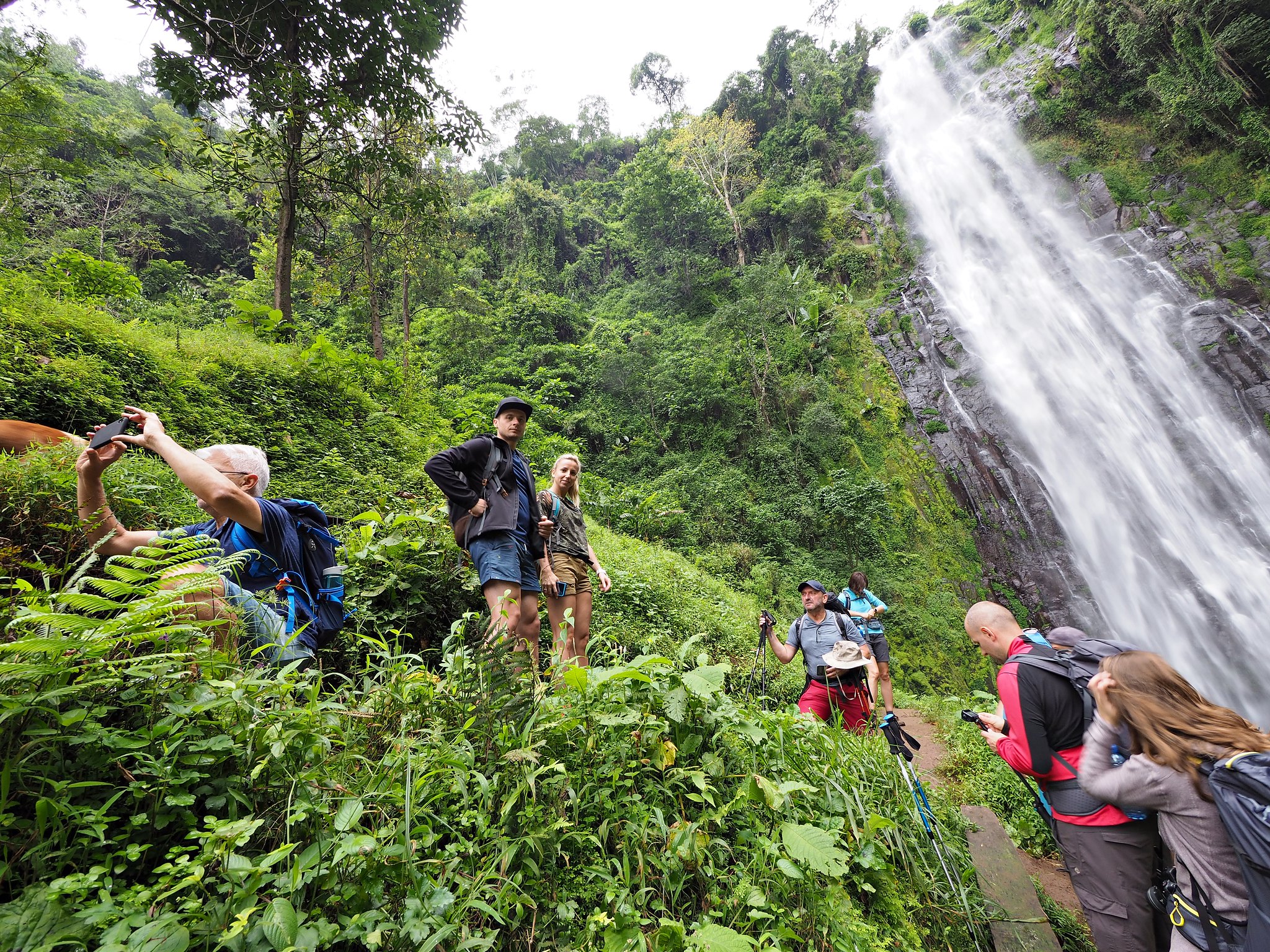
The walk to the waterfall is an important part of the visit, not simply a way to reach the destination. The route passes through a landscape shaped by farming, with coffee plants, banana trees and other crops growing around village homes.
A local guide can help explain the surroundings, point out plants and describe aspects of village life along the way. The walking time varies with your pace, weather and trail conditions, but a planning allowance of around 30 to 60 minutes each way is reasonable.
The route includes uneven ground and may become muddy or slippery after rain. Comfortable closed shoes with good grip will make the walk easier. Visitors should be prepared for some uphill and downhill sections rather than expecting a paved path.
The Waterfall
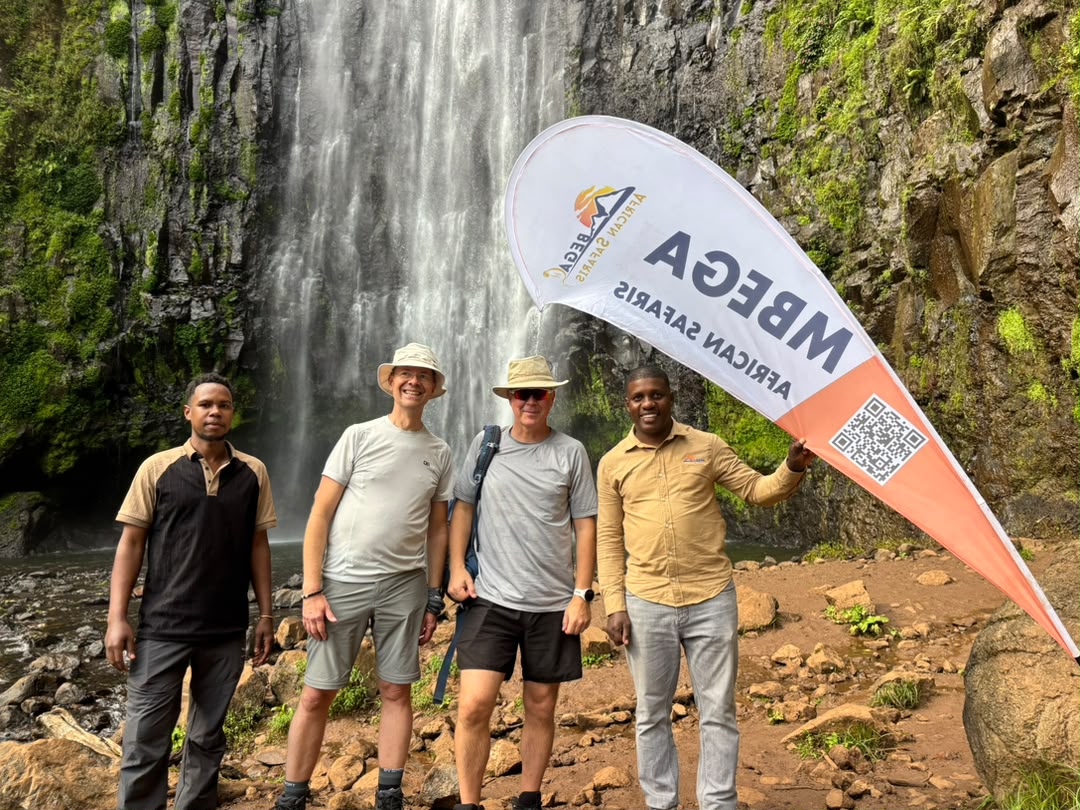
Materuni Waterfall is the main natural attraction of the visit. Water descends through a green landscape into a rocky pool below, creating a place to pause, take photographs and enjoy the surroundings.
You can spend time appreciating the waterfall from suitable viewpoints and resting before walking back towards the village. The atmosphere and water flow can change with the season and recent rainfall.
Swimming may be possible when conditions allow, but it is not essential to the experience. The pool can be cold, and rocks around the water can be slippery. Anyone considering a swim should pay attention to current conditions and local safety guidance.
Views of Mount Kilimanjaro
Materuni sits on the lower slopes of Mount Kilimanjaro, and the surrounding countryside can offer views towards the mountain when the sky is clear. Cloud cover often changes throughout the day, so a clear view of the summit is never guaranteed.
Even when the mountain is hidden by cloud, the green slopes, cultivated farms and forested surroundings make the journey worthwhile for visitors who enjoy landscapes and photography.
The Chagga Coffee Experience
Materuni is known for its coffee-growing traditions, and a coffee experience is a natural complement to the waterfall walk.
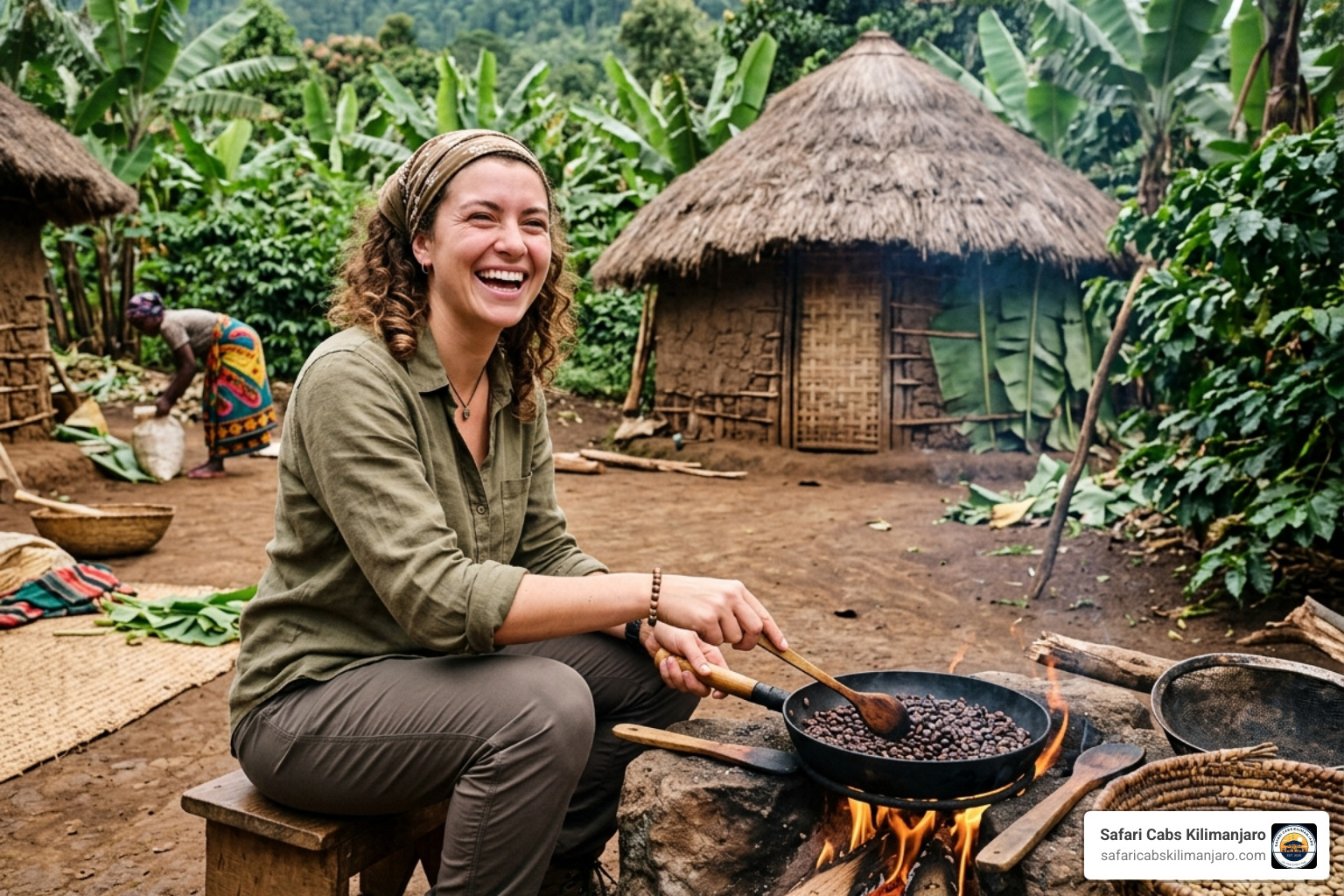
During a traditional demonstration, visitors may learn how coffee is processed and prepared using local methods. Depending on the host and the season, the experience can include handling coffee beans, roasting them over a fire, pounding them by hand and preparing a cup to taste.
The process gives visitors a closer look at the work behind a familiar drink and the role coffee plays in the lives of farming households around Kilimanjaro. It is also an opportunity to spend time with local hosts and learn through participation rather than observation alone.
The exact steps offered can vary. If you would like to take part in the coffee-making process, allow enough time in your schedule so that the experience does not feel rushed.
What Does a Materuni Day Trip Look Like?
A visit from Moshi can often be arranged as a half-day or full-day outing, depending on whether you include only the waterfall walk or combine it with coffee and lunch.
A relaxed day could follow this general order:
Morning: Travel to Materuni Village
Leave Moshi in the morning and drive towards Materuni. The journey takes you into the foothills, where the scenery becomes greener and more rural.
Late morning: Walk to the Waterfall
Meet your local guide and begin the walk through the village landscape. Take time to enjoy the surroundings, learn about local farming and rest at the waterfall before returning.
Midday: Coffee Experience
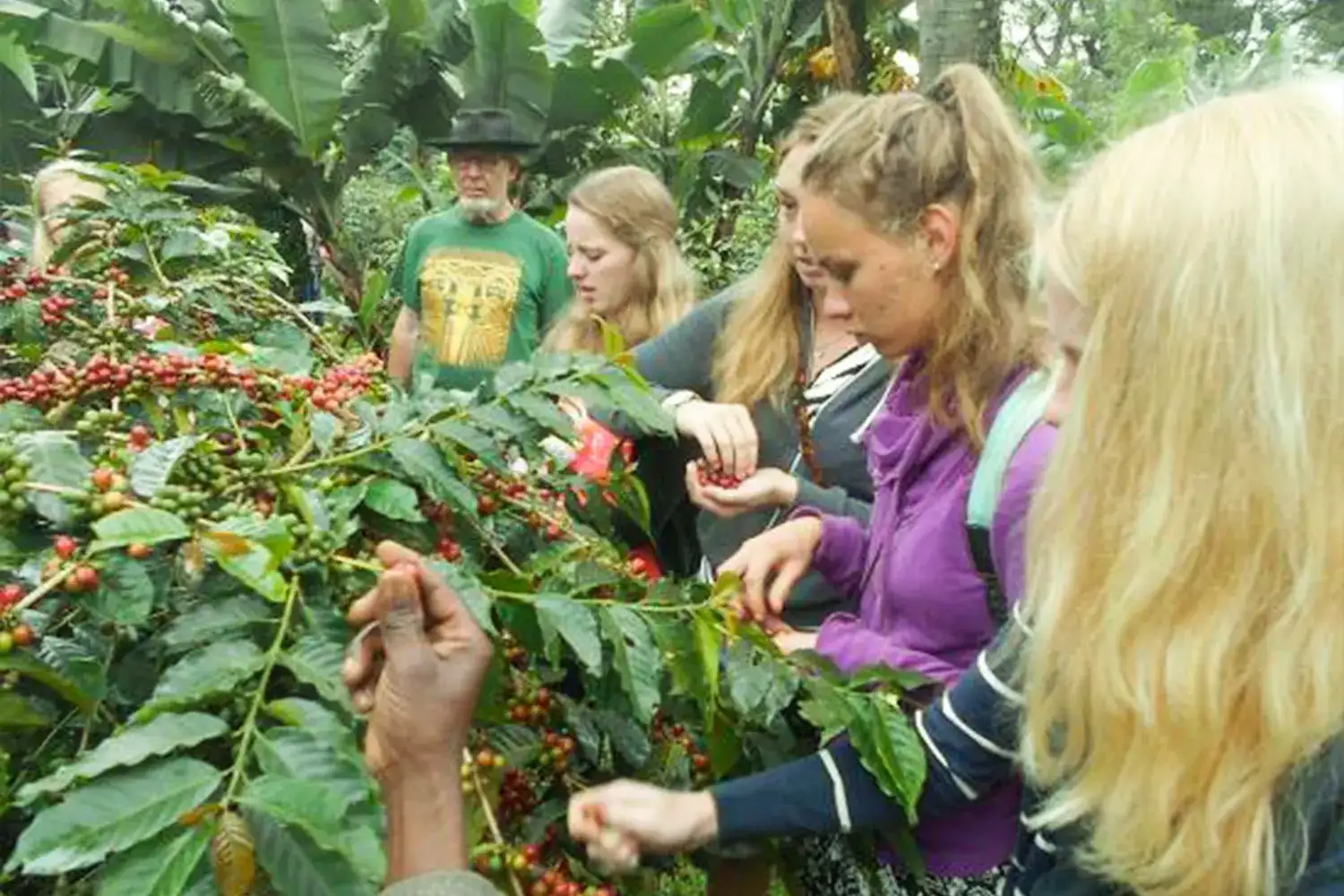
Return to the village for a demonstration of traditional Chagga coffee preparation. This part of the visit gives the day a cultural dimension alongside the natural scenery.
Lunch: Enjoy Local Food
If included in your arrangement, a local meal can provide an opportunity to try dishes commonly prepared in the region. Let your host know about food allergies or dietary requirements in advance.
Afternoon: Return to Moshi
After the activities, travel back to Moshi. The return time depends on the length of the walk, the activities included and road conditions.
This is a suggested sequence rather than a fixed timetable. The order may change to suit the day's arrangements and local conditions.
How Difficult Is the Materuni Waterfall Hike?
The walk is generally suitable for visitors with a reasonable level of everyday fitness, but it should not be treated as a flat stroll. The route has uneven natural surfaces, slopes and sections that may become slippery after rain.
You do not need technical climbing skills, but being comfortable walking outdoors is helpful. Take your time, wear shoes with good grip and let your guide know if you need a slower pace.
If you have recently climbed Mount Kilimanjaro, consider how your legs and energy levels feel before planning the visit. Materuni is a separate village walk, not a recovery requirement, and you can choose a more relaxed day if you are still tired.
When Is the Best Time to Visit Materuni Waterfall?
Materuni can be visited throughout the year, but weather conditions influence the trail, the waterfall and the views.
Drier periods: Walking conditions may be easier, and clearer weather can improve the chances of seeing Mount Kilimanjaro from the surrounding slopes.
Rainier periods: The landscape can look especially green, and the waterfall may carry more water. However, trails can become muddy and slippery, so allow extra time and take care on descents.
There is no single perfect day for every visitor. If your priority is comfortable walking, pay attention to recent weather. If you are mainly interested in the waterfall and lush scenery, you may still enjoy the visit when conditions are wetter, provided the route is suitable.
What Should You Bring?
A few practical items can make the visit more comfortable:
Closed walking shoes with good grip
Comfortable clothing suitable for outdoor walking
Local Experience A light rain jacket
Drinking water
Sun protection, including a hat
Insect repellent
A camera or phone
Swimwear and a quick-drying towel if you may swim
A small bag to keep valuables protected from rain and splashes
Carry only what you need for the walk. A lighter day bag is easier to manage on uneven paths.
Is Materuni Waterfall Suitable for Children?
Materuni can be suitable for families, particularly those who enjoy spending time outdoors. However, the route involves natural terrain, and its suitability depends on children's ages, walking ability and the conditions on the day.
Parents should be prepared to walk at a slower pace, supervise children around uneven ground and keep them away from slippery edges near the water. Swimming should be considered carefully and only when conditions are suitable.
Families who prefer a less active outing may choose to focus more on the village and coffee experience, depending on the arrangements available.
How Much Time Should You Allow?
For visitors starting in Moshi, it is sensible to allow several hours for the drive, waterfall walk and time at the site. Combining the walk with a coffee experience and lunch usually turns it into a longer outing, often around five to seven hours overall.
Your actual schedule will depend on walking pace, weather, the time spent at the waterfall and how the cultural activities are arranged.

If you have a flight, a long transfer or another time-sensitive commitment on the same day, leave a generous buffer rather than planning the visit too tightly.
Frequently Asked Questions
How far is Materuni Waterfall from Moshi?
Materuni Village is approximately 15 kilometres from Moshi, depending on the route and starting point. The drive commonly takes around 30 to 45 minutes, with additional time needed for the walk to the waterfall.
How long does it take to walk to Materuni Waterfall?
The walk commonly takes around 30 to 60 minutes each way. The time depends on your pace, the trail condition and how often you stop along the way.
Can I swim at Materuni Waterfall?
Swimming may be possible in the pool at the base of the waterfall, depending on water levels and conditions. The water can be cold, and rocks may be slippery, so follow local safety guidance and do not enter if conditions are unsuitable.
Is the Chagga coffee experience worth including?
It is a useful addition for visitors interested in local culture and coffee production. The experience can show how coffee is processed and prepared using traditional methods, adding a cultural element to the waterfall walk.
Can I visit Materuni Waterfall without hiking experience?
You do not need technical hiking experience, but you should be comfortable walking on uneven outdoor paths and slopes. Good footwear and a relaxed pace are important, especially after rain.
Can I visit Materuni after climbing Mount Kilimanjaro?
Yes, provided you feel well enough for the walk. If you are still tired after your climb, choose a slower pace or a less demanding plan. If you have concerning or worsening symptoms after your climb, prioritise medical advice rather than a day trip.
Can Materuni Waterfall be visited in half a day?
A shorter visit may be possible if you focus on the waterfall, but adding a coffee experience and lunch usually requires more time. Allow enough room for the walk and return drive instead of rushing each part.
Plan Your Materuni Visit with Mbega African Safaris
Materuni Waterfall offers a different way to experience the Kilimanjaro region: a walk through village farmland, time beside a waterfall and an introduction to the Chagga coffee traditions that remain part of local life.
If you are staying in Moshi and would like to include Materuni in your plans, Mbega African Safaris can help you organise a visit around your available time and preferred experiences.
Share your travel dates, where you will be staying and whether you would like to include the coffee experience and lunch. We can then help you plan a Materuni outing that suits your schedule.