
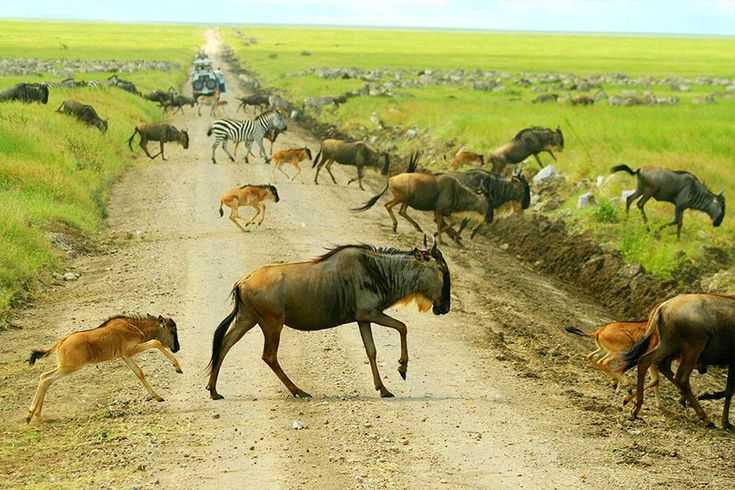
Where we plan February migration safaris and what you can expect on Tanzania’s southern plains.
Use this article as a practical guide for planning your Tanzania journey with Mbega African Safaris.
Where Are the Great Migration Herds in February?
The Great Migration is usually on Tanzania’s southern Serengeti plains in February, including Ndutu and adjoining parts of the Ngorongoro Conservation Area.
At Mbega African Safaris, this is the region we prioritise when you want to experience wildebeest calving. The southern short-grass plains provide important seasonal grazing and calving grounds during the January-to-March period.
However, the migration is not one tightly packed herd standing in a single location. Animals can spread across a large area, gather around productive grazing or move between different parts of the ecosystem.
For your safari, that means:
- Choosing the southern region is the starting point.
- Your overnight location needs to support the route.
- Daily game drives should respond to wildlife movements.
- Several outings provide more opportunities than one brief visit.
Understanding Ndutu and Southern Serengeti
Ndutu is part of the wider southern Serengeti ecosystem, rather than a separate national park.
Safari descriptions sometimes use “Ndutu” and “Southern Serengeti” interchangeably. They refer to connected wildlife landscapes, but your exact location still matters for access arrangements, fees and driving distances.
When we prepare your itinerary, we explain:
- Where your proposed overnight stop is located.
- Which wildlife areas the route is intended to explore.
- Whether your journey crosses protected-area boundaries.
- How those arrangements affect your time and quotation.
A package described only as a “Serengeti safari” does not necessarily include the southern plains. If February calving is your priority, make that clear before booking.
Why Do the Herds Use the Southern Plains?
The herds follow grazing and water, with the southern plains supporting an important stage of their annual cycle.
For travellers, the attraction is more than the number of animals. It is the opportunity to watch a large wildlife community sharing the same landscape.
Your guide may help you observe:
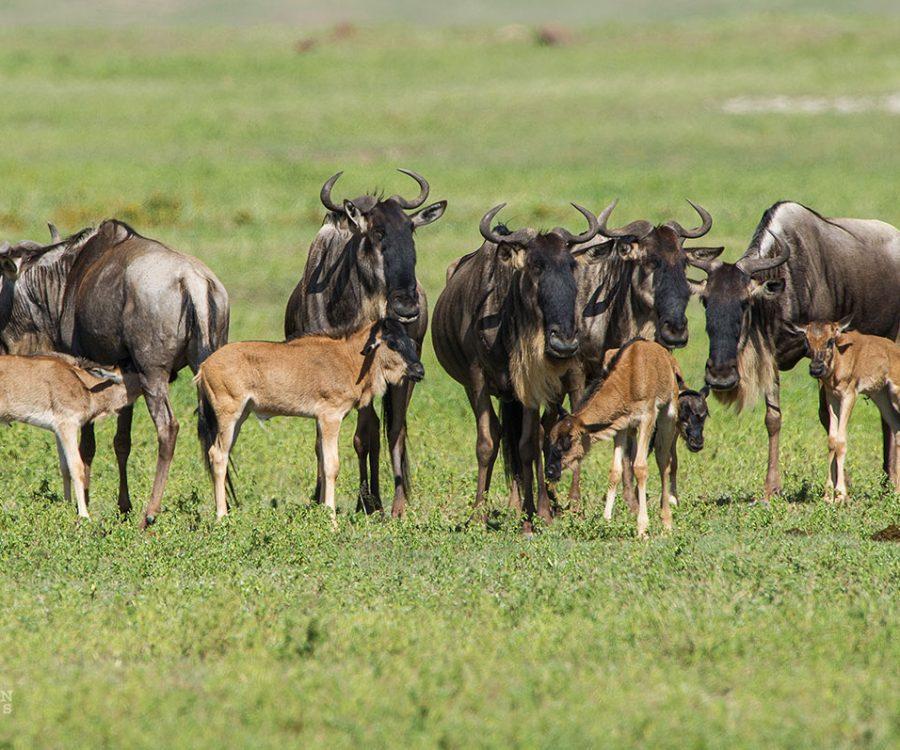
- Wildebeest feeding and resting.
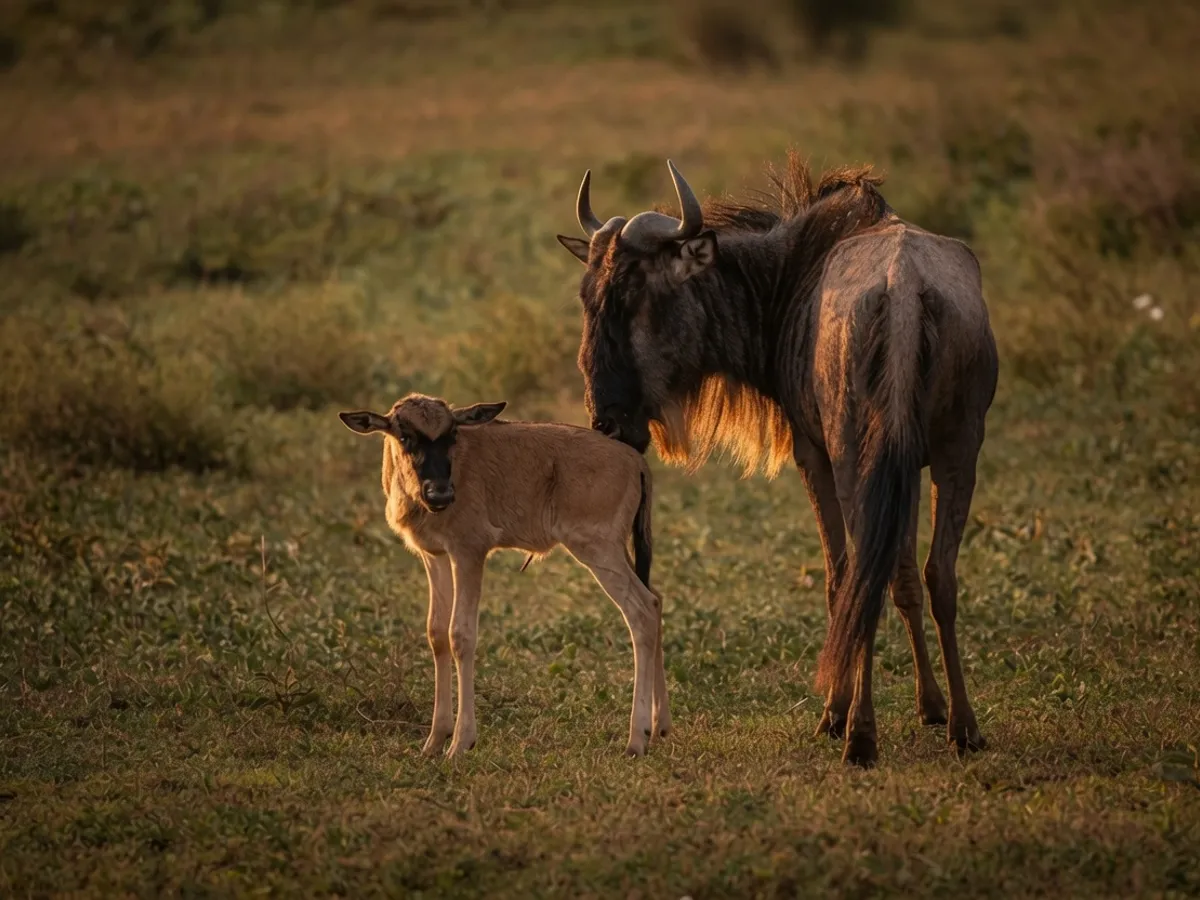
- Mothers keeping contact with calves.
- Young animals moving within the herds.
- Zebras grazing nearby.
- Predators watching or travelling through the area.
We leave time for observation because a sighting often becomes more interesting after the first few minutes.
What Can You Expect During a February Game Drive?
Expect a combination of searching, waiting and watching wildlife behaviour.
Some encounters happen soon after departure. Others require patience and a change of route.
A day may include:
- An early departure from your overnight accommodation.
- Exploring areas selected around current wildlife activity.
- Time at worthwhile sightings.
- A picnic lunch at a designated location.
- Further afternoon wildlife viewing.
- Return before evening, according to the day’s arrangements.
We may use packed meals when that helps us spend more time in the field. Alternatively, a shorter outing and a break may better suit your group.
Will You See Wildebeest Being Born?
You may, but we cannot promise a birth on a particular day.
February sits within the main seasonal calving window. Seeing young calves is a realistic reason to choose this period, but witnessing the actual moment of birth is a separate possibility.
Your experience might instead include:
- A calf resting close to its mother.
- Young wildebeest feeding.
- Calves keeping pace with a moving herd.
- Mothers and young people communicating.
- Several generations of animals grazing together.
These quieter encounters are part of what makes the season rewarding.
Will You See Predators?
Predator viewing is an important possibility, but it remains unpredictable.
We search for animals such as lions, cheetahs and hyenas while exploring suitable habitats.

A predator encounter may involve resting, walking, watching prey or feeding. A hunt is never guaranteed.
For families, we discuss these possibilities before travel. The natural environment includes both new life and predation, and it helps parents to prepare children for that reality.
Should You Visit Northern Serengeti in February?
For a safari specifically focused on calving, we prioritise the southern ecosystem.
That does not mean Northern Serengeti has no wildlife in February. It means your route should match your reason for travelling.
If your main interest is:
- Wildebeest calving — We focus on the southern plains.
- A broader Serengeti experience — We can discuss additional regions.
- The famous northern river crossings — We would discuss a different seasonal plan.
We avoid adding distant regions simply to make the itinerary sound more comprehensive.
How Many Nights Should You Spend Near the Herds?
Two to three nights are a useful starting point, with three nights giving you two full days between transfers.
More time allows us to:
- Explore different areas.
- Revisit productive locations.
- Remain longer at interesting sightings.
- Adjust around changing conditions.
- Avoid rushing every outing.
Your arrival and departure days can include game viewing, but they also involve travel. We show that distinction clearly.
What Other Destinations Can You Include?
We can combine Ndutu with:
- Ngorongoro Crater for a contrasting wildlife setting.
- Tarangire for elephants and baobab landscapes.
- Central Serengeti for more game-drive time.
- Zanzibar for a beach extension.
The combination depends on your available days. For a calving-focused trip, we protect meaningful time in Ndutu before adding more stops.
Plan Your February Migration Safari With Mbega
Tell us your dates, group size and what you most want to experience. We will recommend a southern migration itinerary with suitable overnight locations, practical transfers and clear inclusions.